
Blog
What Is the EUDR? A Guide for Cooperatives (2026)
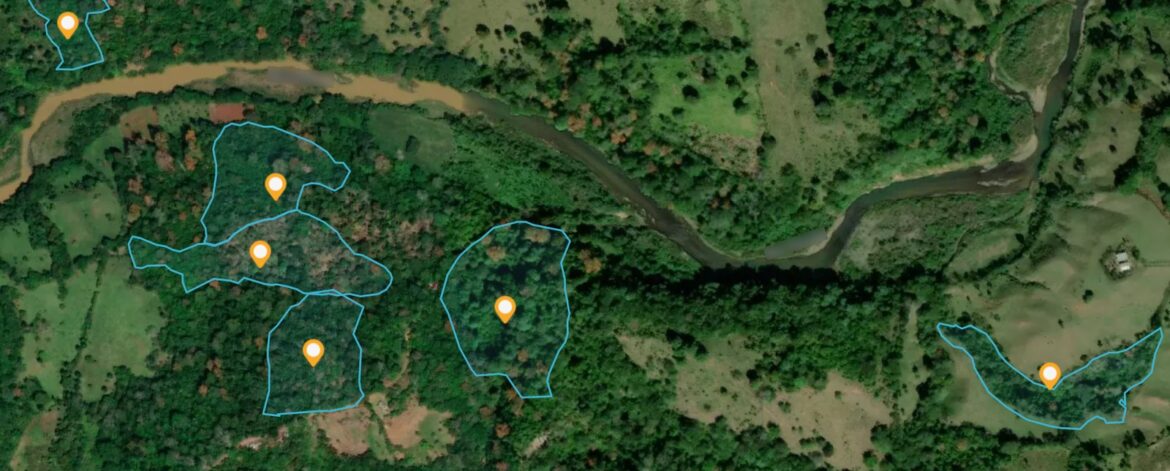
What is the EUDR, and what changes for your cooperative from 30 December?
EUDR: What Every Cooperative Needs to Know Before It Applies
If your cooperative exports coffee, cocoa or another commodity to Europe, you’ve probably already asked yourself what is the EUDR and what it means for you. Chances are your buyer has already asked for coordinates, plot maps or documents nobody used to request.
However, the key date is close: 30 December 2026. In this article we explain what the regulation is, who it applies to, where a cooperative fits in, and how to get ready in the coming weeks — without unnecessary jargon.
What is the EUDR, in a nutshell
The EUDR is Regulation (EU) 2023/1115 on deforestation-free products. Its goal is that only products meeting three conditions are sold on — or exported from — the EU market:
-
Deforestation-free: they come from land that has not been deforested after 31 December 2020.
-
Legal: they were produced in line with the laws of the country of production (land rights, environment, labour, human rights, tax…).
-
Covered by a due diligence statement: the company placing them on the market has checked the above and declared it.
One nuance: the regulation has been in force since 2023, but the EU has postponed its application twice. What’s coming now is the moment it becomes mandatory in practice.
Which products the EUDR covers
Specifically, the EUDR covers seven commodities — cocoa, coffee, oil palm, soy, rubber, cattle and wood — plus a list of derived products (chocolate, roasted coffee, palm oil, furniture, paper…).
The EU has adjusted the list over time. With the 2026 simplification, for example, it removed leather and added soluble coffee and some palm-oil derivatives. These new products apply from 30 December 2027.
If your cooperative works with fruit, vegetables, sugar or cereals (other than soy), the EUDR doesn’t affect you directly.
Key dates: when the EUDR applies
After two postponements and a simplification package, the dates are:
-
Large and medium-sized companies: from 30 December 2026 (also timber operators already covered by the old EU Timber Regulation).
-
Micro and small companies: from 30 June 2027.
-
Products added to the list in 2026: from 30 December 2027.
Moreover, the European Commission has made it clear there will be no third postponement. And since most European coffee and cocoa buyers are large or medium-sized companies, the date that matters for your cooperative is 30 December 2026 — even if you are a small organisation.
Who does the EUDR apply to? Operators, traders and cooperatives
In fact, this is where most of the confusion lies. The EUDR defines two roles:
-
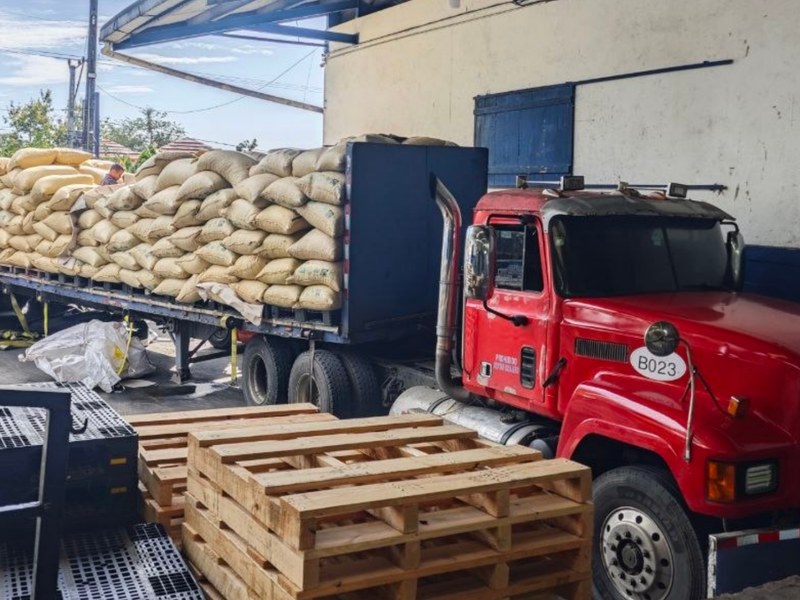
Operator: the company that first places the product on the EU market or exports it from the EU. Usually the European importer. It submits the due diligence statement in the EUDR Information System and answers to the authorities.
-
Trader and downstream operator: those who buy and sell later within the EU. Since the 2025 reform, they no longer file their own statement; they only need to keep the operator’s reference number.
And the cooperative in Peru, Colombia or Honduras? It is not an operator, because it doesn’t place the product on the EU market. But the operator can only file its statement if it receives reliable origin data — and only the organisation that knows the producers and their plots has that data: your cooperative.
In practice, the EUDR doesn’t bind you legally, but your access to the European market depends on being able to deliver that data. If your cooperative is based in the EU and sells covered products directly (cattle, for example), it may well be an operator, with the full set of obligations.
What your buyer will ask for
For instance, picture a European cocoa buyer working with several cooperatives. For each shipment, it needs to be able to answer:
-
Which producers and which plots contributed to this batch?
-
Do we have complete, consistent geolocation for all those plots?
-
Is there documentation showing the cocoa was produced legally?
-
If an inconsistency shows up (a plot overlapping a forest, a duplicate producer…), can it be investigated and fixed?
-
How long does it take to put all this together?
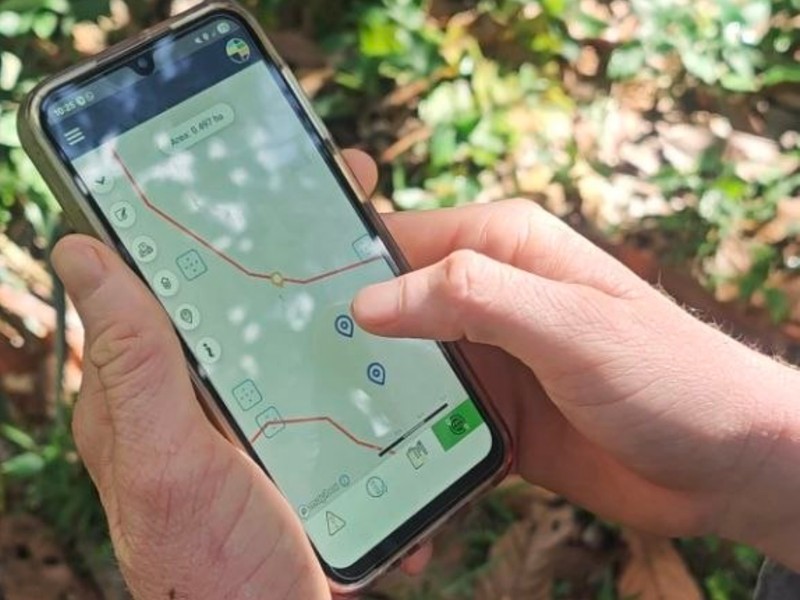
In addition, the EUDR requires every plot of origin to be located. For example, plots larger than 4 hectares need a full polygon; for smaller ones, a single point is enough. In our article on ICS in Excel mistakes we saw how easily a badly recorded coordinate goes unnoticed.
In the next article in this series, we’ll look in detail at what data the EUDR actually requires, field by field.
What happens if the data isn’t there
EUDR penalties fall on the operator: fines of at least up to 4% of its annual EU turnover, confiscation of goods, or temporary exclusion from public contracts. With that much at stake, the buyer will do the logical thing: refuse a batch whose origin it can’t prove.
So for a cooperative, the real risk isn’t a fine — it’s losing sales or customers to suppliers who deliver the data on time. And the other way round: a cooperative with well-organised data becomes a more attractive supplier.
Finally, the country matters too. Indeed, the EU classifies countries as low, standard or high risk. Sourcing from a low-risk country simplifies the buyer’s procedures, but doesn’t remove the need for geolocation and traceability.
How to prepare your cooperative for the EUDR in the coming weeks
Good news: if your cooperative runs an Internal Control System (ICS) for organic or fair trade certification, a good part of the work is already done. That’s because the EUDR asks for things your ICS already handles — a producer list, plots, inspections and evidence. The main difference, however, is how strict it is about geolocation and traceability down to the batch.
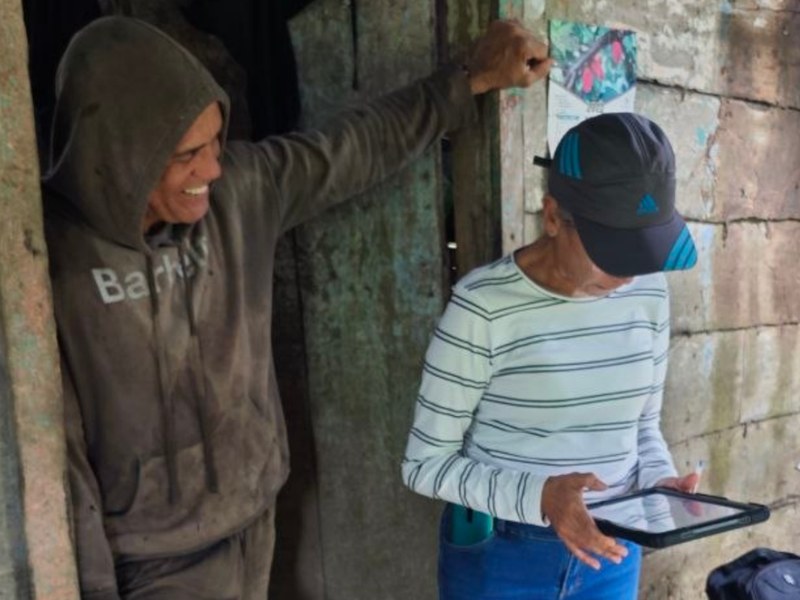
Five practical steps:
-
Talk to your buyers. Ask what data they need, in what format (GeoJSON, KML, Excel…) and by when.
-
Check the geolocation of all your plots. Make sure every plot has coordinates, plots over 4 ha have a polygon, and polygons don’t overlap or land in impossible places.
-
Link every plot to a registered producer, with up-to-date details and no duplicates.
-
Gather legality documentation: land titles or use rights, permits and any document showing production complies with national law.
-
Get ready to trace the batch. Be able to say which producers and plots contributed to each shipment.
Just like organic audit preparation, the key isn’t having the data — it’s being able to find and prove it quickly when asked.
How abunda+ helps with the EUDR
abunda+ is a platform for digitalising the Internal Control System of cooperatives and producer groups. Above all, it brings together in one place the information the EUDR puts centre stage:
-
Producer and member profiles
-
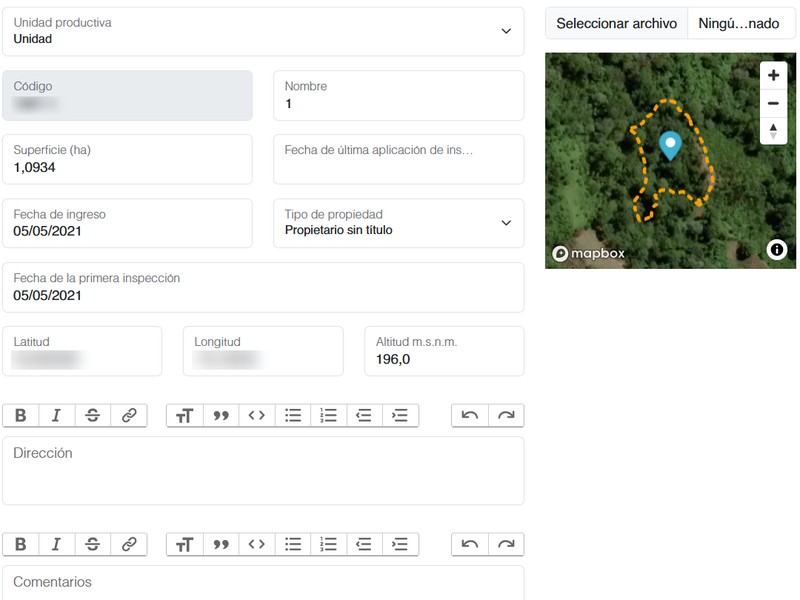
Farms, production units and plots with their geolocation, on a plot map
-
Internal inspections with questionnaires, photos and evidence
-
Non-conformities and their follow-up
-
Supporting documentation and risk information
As a result, when your buyer asks for the data, you won’t have to rebuild it from ten different files.
To be clear: abunda+ doesn’t replace the operator’s due diligence or file the statement on its behalf. What it does is give the cooperative a reliable data foundation that those processes depend on — and that same foundation also serves organic certification, fair trade and the group’s day-to-day management.
The EUDR applies from 30 December. Want to see what your producers and plots would look like in abunda+? Request a demo of the platform.